The INSENTIVE project is structured into six work packages, with a total duration of four years (August 2025–August 2028).

Work Package 1 constitutes the organizational backbone of the project and spans the entire 48-month implementation period. Its primary objective is to coordinate all research activities, ensuring that each stage is carried out smoothly and in accordance with the established timeline. Under the supervision of the Principal Investigator, the team manages the administrative and financial aspects of the project, while ensuring full compliance with the applicable legal and regulatory framework. In addition, WP1 is responsible for establishing effective communication procedures, both internally among members of the research team and externally with collaborating institutions. Through regular reporting on the financial and administrative progress of the project, transparency is ensured and resources are optimally allocated to achieve the research objectives.

Work Package 2 focuses on ensuring methodological quality, reliability, and the societal relevance of the research. A key innovative feature is the preregistration of studies in open-access repositories, which enhances transparency and reduces publication bias. Two advisory bodies are activated within this framework: the International Scientific Advisory Board and the Community Advisory Board. The former consists of five internationally established scholars with recognized expertise in the research domains under investigation. The latter comprises 4–8 members drawn from the groups under study, selected through an open call disseminated via social media platforms. At the conclusion of the project, findings from all studies will be integrated through a triangulation protocol. This holistic approach enables an interpretative synthesis of the research results in light of social realities, ultimately leading to the development of policy guidelines and best-practice recommendations for the promotion of equality.

Work Package 3 examines the association between contact between men and women and support for gender equality, employing a sequential mixed-methods design. The first phase involves qualitative research through focus groups, in which men and women discuss their personal experiences, perceived social inequalities, and the ways in which their contact with the other gender shapes their views. This is followed by a quantitative component consisting of a three-wave longitudinal study, with six-month intervals between measurements. The aim is to examine under what conditions intergroup contact strengthens or weakens mobilization for social change, while controlling for factors such as emotions, political beliefs, and the quality of contact. This design enables an in-depth understanding of gender dynamics within the Greek sociocultural context.

Following a structure similar to Work Package 3, Work Package 4 focuses on contact between cisgender heterosexual individuals and LGBTQI+ persons. The qualitative component highlights participants’ lived experiences regarding inequalities and the challenges faced by sexual minorities within Greek society. Subsequently, the quantitative longitudinal study examines how contact with members of the other group influences participants’ attitudes toward LGBTQI+ rights over time. Particular emphasis is placed on reaching hard-to-access populations through the use of contemporary sampling strategies, while explicitly incorporating an intersectional perspective (e.g., examining how individuals’ multiple social identities interact). Through this approach, the project seeks to address a significant research gap in the Greek context, generating empirical data that are often scarce even within the international literature.
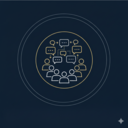
In Work Package 5, theoretical knowledge is translated into practice through a model grounded in intergroup dialogue. A structured 8–10 week intervention will be designed to bring together members of advantaged and disadvantaged groups. The dialogue unfolds across four stages: beginning with relationship building and the exploration of commonalities; progressing to the discussion of controversial or sensitive issues; and culminating in the joint planning of actions aimed at social change. The intervention will be implemented with the group identified as demonstrating the lowest levels of support for social change, based on the findings of Work Packages 3 and 4, in order to maximize the project’s societal impact. Its effectiveness will be evaluated through a randomized controlled trial, with assessments conducted immediately after the intervention and at 3- and 6-month follow-ups, in order to determine the durability of attitudinal change among participants.
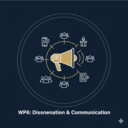
Work Package 6 ensures that the findings of the INSENTIVE project achieve broad visibility within both the scientific community and society at large. Dissemination is structured around three pillars: Academic communication, including publications in international peer-reviewed journals and presentations at scientific conferences; social media outreach (Instagram), used both to inform the public and to recruit participants; and policy engagement, through the development of policy briefs and best-practice guidelines addressed to institutional stakeholders. The project culminates in an open dissemination event at the end of the fourth year, where researchers, activists, students, and members of the public will engage in dialogue on the research findings and their practical implications for fostering a more just and inclusive society.
